
Bengaluru
Hotter summers, unequal access to cooling and long commutes. Some households can afford air conditioning; others rely on public shade. Young people stressed protecting trees, lakes and green spaces.
Voices / Research
Building a youth-responsive, heat-resilient policy ecosystem. Research with young people across urban, coastal, tribal and drought-prone Karnataka.
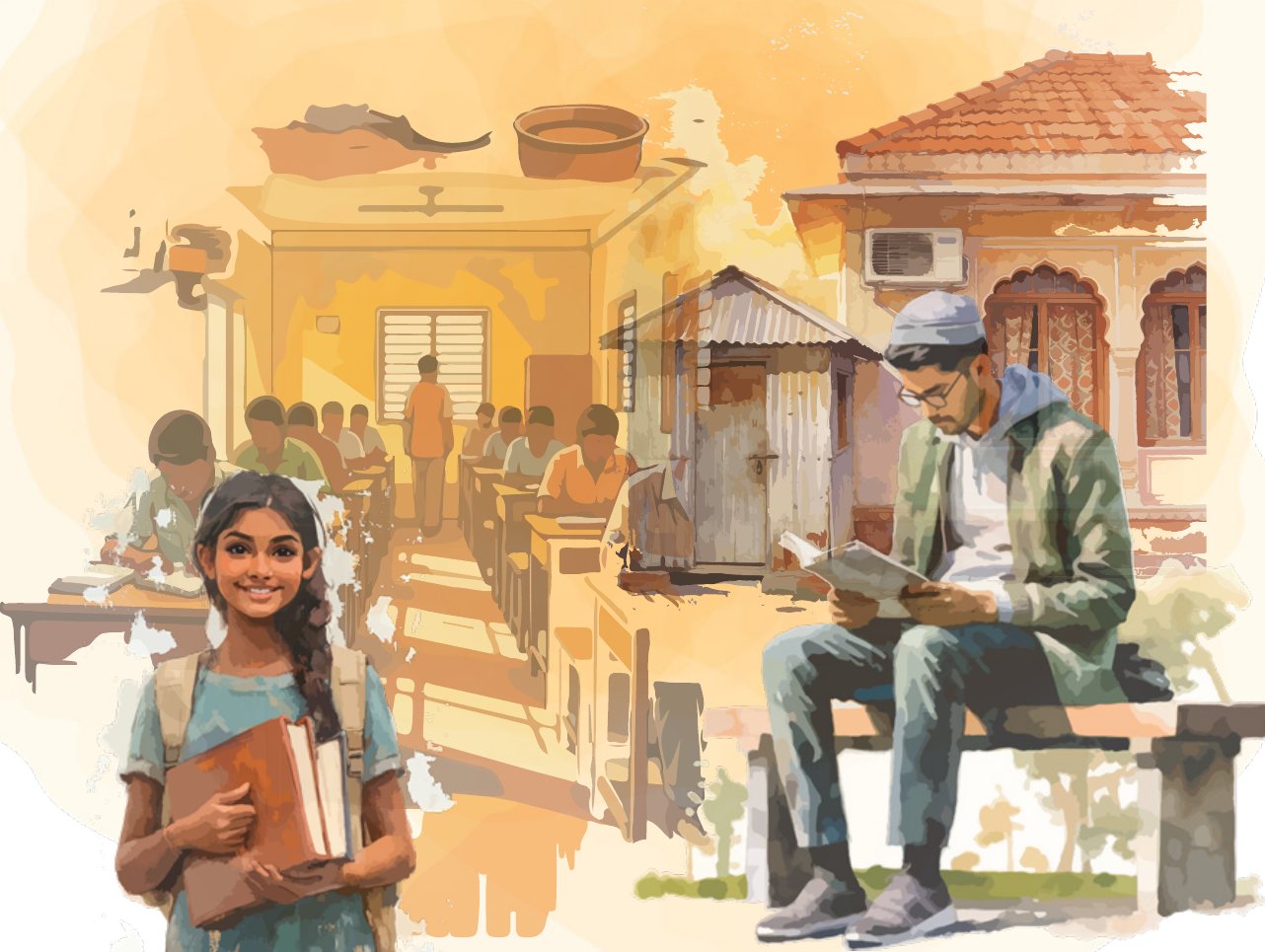 Watch the filmHeat Through the Eyes of Young PeopleHeat, Health and Young People in Karnataka · Click to play
Official selection · BLR Design Week Film Festival 2026
Developed by Swasti in partnership with Restless Development. Screened at J.N. Tata Auditorium, IISc, Bengaluru, on 24 September 2026.
Heat stress is no longer an episodic hazard in Karnataka. It is a public health, development and governance challenge reshaping young people's lives.
Rising temperatures, changing weather, water scarcity and urban heat islands are changing how young people study, work, travel, earn a living and look after their physical and mental wellbeing. The effects go well beyond discomfort, reaching education, productivity, health and their hopes for the future.
This evidence paper, by Restless Development with Swasti, The Health Catalyst, asks how heat is experienced by young people across Karnataka, and what a youth-responsive policy ecosystem would look like.
Heat is a risk multiplier. It does not act alone. It amplifies inequalities of poverty, work, housing, water and geography.
Young people in farming, fishing, construction, informal work and long commutes face heightened exposure, while those in poorly ventilated urban settlements carry compounded thermal stress from weak cooling infrastructure and shrinking green cover.
The study brought together an evidence synthesis, listening exercises with young people, expert insights and a youth co-design workshop, across four settings that reflect Karnataka's climatic and developmental diversity.
Hotter summers, unequal access to cooling and long commutes. Some households can afford air conditioning; others rely on public shade. Young people stressed protecting trees, lakes and green spaces.
Young fisherfolk feel heat through humidity, direct sun at sea and changing marine life. They shift fishing hours, combine forecasts with traditional knowledge, and share drinking water and support at sea.
Heat is read through ecological change: shrinking forests, shifting rainfall, lost biodiversity and disappearing traditional foods. Indigenous knowledge still shapes healthcare and adaptation.
Heat is an unavoidable reality. Young people report dehydration, fatigue, skin conditions and lost productivity, and hard trade-offs between protecting health and keeping a livelihood.
At the youth co-design workshop, participants described heat as deeply connected to every part of life. They also said they are among the most affected by climate change, yet least represented in the discussions that decide the response.
They are already adapting: changing work hours and diets, using protective clothing and seeking shade, while asking for better information and stronger community support.
Young people should be recognised as knowledge holders, community responders and policy actors, not only as beneficiaries.
Stronger public health responses, climate-responsive places to learn, and protection for young people's livelihoods.
Youth-informed heat action planning, local governance platforms, and young people recognised as stakeholders.
Building on what young people already do, valuing traditional knowledge, and spreading awareness through peer networks.
Shaped with young people from across Karnataka, the roadmap moves from isolated interventions to a coordinated ecosystem where institutions, communities and young people build resilience together.
Karnataka's response to rising heat cannot be designed for young people without actively engaging young people themselves.
There is no single youth experience of heat in Karnataka. The most significant finding is the gap between what young people live through and how climate governance is organised. Closing that gap is not only a matter of inclusion or equity: it is fundamental to effective climate governance.
A resilient future needs policies that protect youth, institutions that include youth, and governance that trusts and enables youth leadership.