What young people were up against
In Anjanapura, 63% of households face a water crisis several times a month. Life revolves around when water might come. Residents felt helpless, and few saw the connections between their water, their health and a changing climate.
What the grant made possible
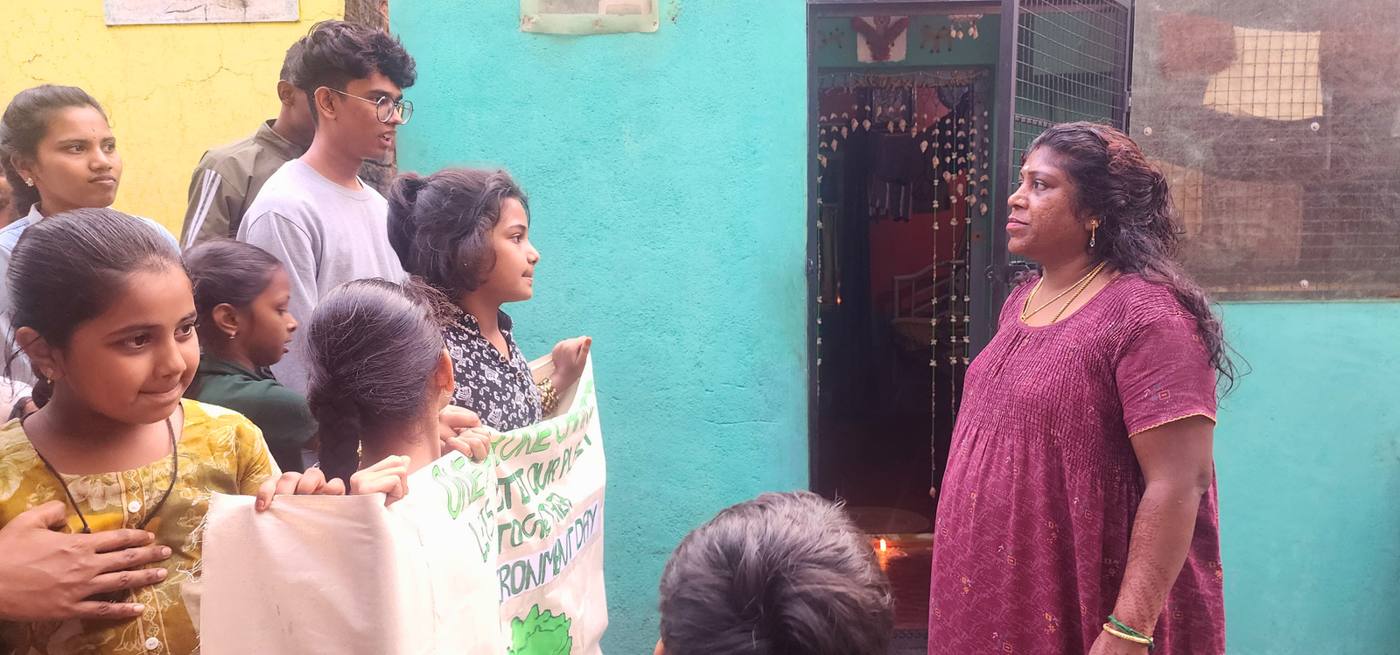
Over six months, research, focus groups and co-design produced booklets and short videos made with the community, in its own languages. Young mobilisers from the neighbourhood carried them door to door, and residents began to name their problems and raise them with the ward.
Working through the local ecosystem
SOCHARA worked with Social Innovation Studio, Makkala Jagriti and Vismaya Kalike to understand how people in Anjanapura use and think about water. Early on, some residents were wary of outsiders who had made promises before. Repeated meetings, and a focus on what people actually needed, water and livelihoods, built trust.
Young mobilisers as messengers
Young people from the community mapped local problems and then went door to door with the materials, starting conversations. Sessions at the Yuva Cafe covered microplastics, a plogging drive at Avalahalli Lake and a photography competition on waste. Videos shared on WhatsApp travelled further than the planned sessions, and households that had been missed came looking for the materials.
What residents took away
One resident said her street had long lived with rashes, throat irritation and other illness without knowing water could be the cause, and that she would now tell everyone to call the ward number. Others began linking erratic weather to coughs, colds and fevers in their families.
“Community mobilisers truly are the new superheroes, ready to bring effective, lasting change.”Ankita Mirani, founder, Social Innovation Studio