Young people researched climate change in their own city, and asked their neighbours what it means.
The Lab's first two phases put young people at the centre of research. Youth Climate Champions and Youth Researchers co-designed and led a mixed-methods study, with training and support from Restless Development, in five low-income communities of urban Bengaluru.
They set out to understand how communities, and young people in particular, understand climate change, how they experience it, what they think should be done, and what support they expect from those in power. They also looked at the local issues where climate change shows up: water, waste, infrastructure and livelihoods.
Research at a glance
Surveys and focus group discussions designed and run by young people.
A youth-led research process
Young leaders were trained and supported at every step, from designing questions to convening conversations for action.
- Setting the framework
- Designing the questions
- Collecting the data
- Analysing the findings
- Validating with communities
- Convening for action
Five communities, four themes
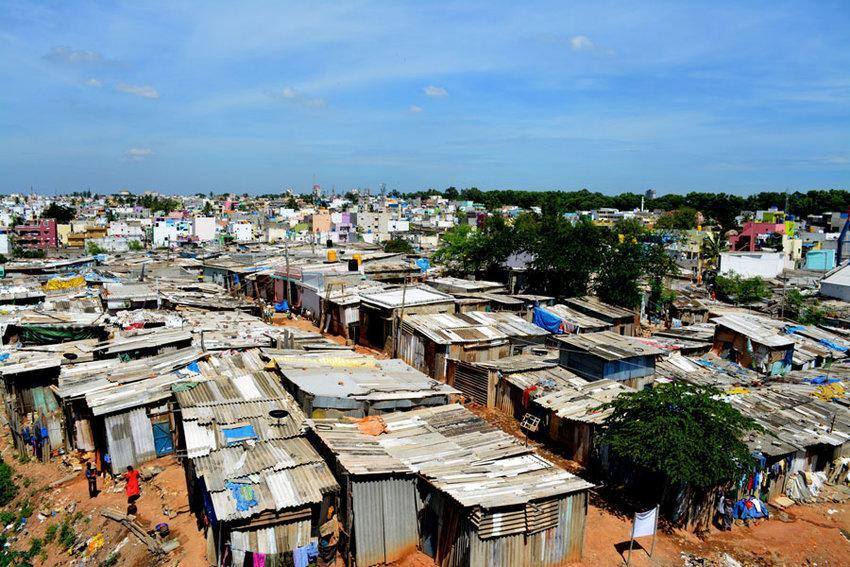
Each location's most pressing issue, and how it connects to a changing climate.
- Tubrahalli
Infrastructure and resilience
A small informal settlement of migrants with no permanent housing or land rights, and very limited water, electricity and sanitation. Floods, heat and Covid hit lives and livelihoods hard. Residents named lack of land ownership, weak community unity and little support from authorities as their biggest barriers.
- DJ Halli
Water management
A large, recognised slum where most homes have piped water (96%) and free drinking water (84%). But supply is uneven and erratic in parts, water turns muddy in the rains, and waterborne illness is common.
- Adigara Kalahalli
Youth and livelihoods
Farming, once the main livelihood, has become unviable with water loss, land-use change and urbanisation. Daily wage work and migration are now the norm, and young people want job-oriented skills and higher education to secure decent work.
- Adigara Kalahalli, Ambedkar Colony and Ramamurthy-Akshaya Nagar
Solid waste management
Fewer than a third of residents use BBMP's waste service. Trucks skip narrow lanes, so waste is dumped in open plots or burnt and spills into water bodies, causing illness. Residents see the value of segregation and want to practise it.
What people told the young researchers
For communities on the margins, climate change is not a distant debate. It is an everyday reality.
Understanding
- Young people know more
- 40% of respondents knew about climate change. One in two young people was aware of it, against one in three older adults.
- Wisdom beyond the survey
- Women and people without formal education under-reported their knowledge, yet their understanding in discussions was accurate and deep.
Experience
- Change people can see
- 45% had personally noticed changes in their environment, most often rising heat and water shortage. In three communities, every other person did.
- A threat to health
- Over 53% said climate change affects their health and safety moderately or seriously; 27.4% of young people called it very significant.
Response
- Youth are already acting
- 54% of 18 to 29 year-olds had taken personal action, twice the rate of those over 30 (28%), mostly cutting plastic and planting trees.
- Looking to government
- 49% saw BBMP as most responsible for action, then national government (26%). Young and old agreed young people should lead, but need support to organise.
What the young researchers recommend
- Creative awareness on how local issues link to global climate change, using theatre, music, art and games.
- Document local climate knowledge, including elders' observations and wisdom in local songs and stories.
- Study the evidence, such as decades of city master plans, to trace causes and back advocacy.
- Build a cadre of young changemakers, with a community centre, stipends and regular activities like football, films and lake clean-ups.
- Connect college and community youth so global theory and ground realities inform each other.
- Engage with policy and hold producers and policymakers to account, beyond individual action.
- Regular forums with duty bearers, from BBMP ward committees up to state level, including public hearings.
- Build alliances with activist and youth groups already working on these issues.
- Ground everything in community resilience, with marginalised communities leading.
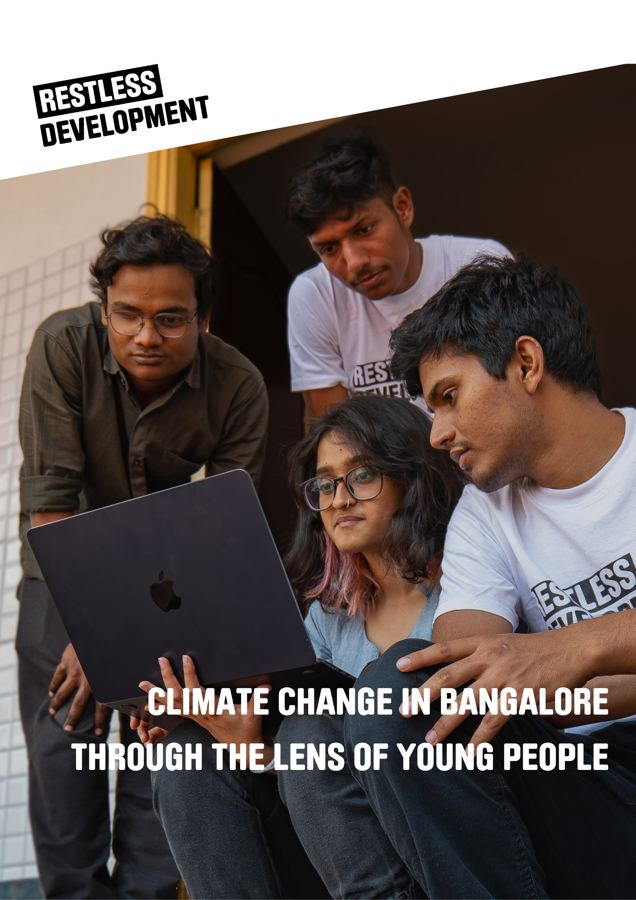
Climate change in Bangalore through the lens of young people
The complete youth-led research report, with methods, location findings, charts, community voices and recommendations.
Download the full report (PDF)